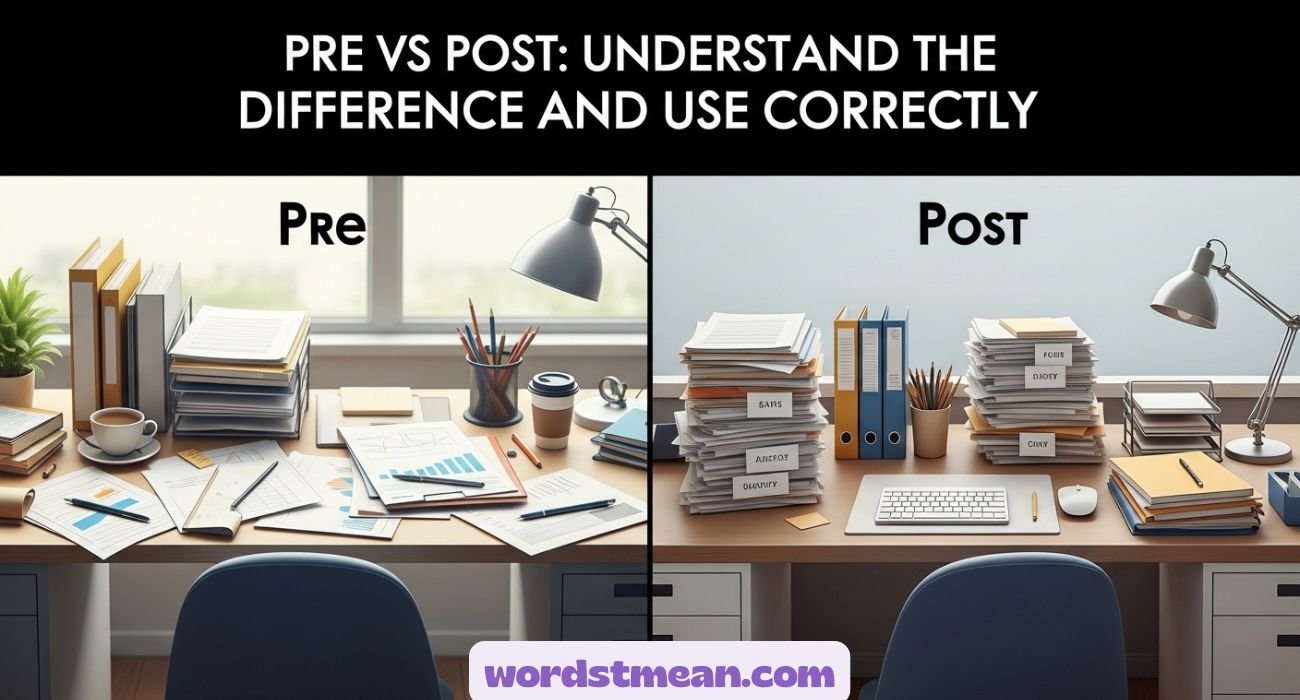
Pre vs Post: Understand the Difference and Use Correctly
Pre vs Post explains the difference between before and after in simple English. Pre means something happens before an event takes place. Post means something happens after the event has finished.
Many students and writers mix up Pre vs Post in daily writing. This small confusion can change the meaning of a full sentence. Understanding the difference helps you write clearly and correctly.
Pre vs Post appears in school work, meetings, and everyday conversations. You can see it in words like pre-exam and post-exam. Learning this rule makes your English stronger and more confident.
What Does Pre vs Post Mean? A Simple Explanation

The pre vs post definition is rooted in time. The prefix pre means before something happens, while post means after something happens. These two are known as prefixes pre and post, and they belong to a group called temporal prefixes in English. Understanding these prefixes helps you clearly express timing without long explanations.
In simple terms, when something happens earlier, you use pre. When something happens later, you use post. This basic rule applies across pre and post in English, from school assignments to business emails and technical manuals. The challenge comes when writers forget to pause and ask when to use pre or post, leading to common misunderstandings.
How Pre and Post Shape Meaning
The power of pre vs post grammar lies in how it shapes meaning. A single prefix can completely change what a sentence communicates. For example, a pre-test and post-test measure different things, even though the base word stays the same. One checks knowledge before learning, the other checks results after learning.
This distinction matters because readers depend on timing clues to understand actions, results, and responsibility. In professional environments, mixing up pre-event vs post-event language can cause scheduling errors or incorrect expectations. In academic settings, misuse can affect clarity and grades. Clear pre and post usage ensures your message is accurate and trustworthy.
The Science Behind Pre and Post

Linguists explain that prefixes like pre and post help the brain organize information in a sequence. These before and after prefixes act as mental signals that prepare readers for what comes next. Research in language processing shows that readers understand instructions faster when time markers are used correctly.
In psychology and education, studies using pre-exam and post-exam assessments show how timing language directly affects interpretation of data. When learners see pre, they expect preparation. When they see post, they expect results or reflection. This explains why English prefixes meaning is not just grammar trivia but a key part of effective communication.
Pre vs Post in Language Patterns
In standard American English, grammar rules for prefixes are quite consistent. Pre and post usually attach directly to the word they modify, sometimes with a hyphen for clarity. This pattern helps readers instantly recognize timing. Writers who follow these patterns reduce common English confusion and improve readability.
For students and professionals trying to learn pre and post, recognizing these patterns is essential. In pre and post in sentences, pre almost always signals preparation or anticipation, while post signals evaluation or outcome. This predictable structure makes English easier to understand once you notice it.
Common Mistakes with Pre and Post
One of the most frequent common prefix mistakes is reversing meaning by using the wrong prefix. Saying post-workout warm-up instead of pre-workout vs post-workout creates logical confusion because warming up happens before exercise. These mistakes often appear in rushed writing, especially emails and messages.
Another issue appears in pre-meeting and post-meeting communication. Sending post-meeting notes before the meeting happens can confuse teams and damage credibility. Being aware of pre vs post examples and slowing down to check timing can prevent these errors and improve clarity.
Pre and Post in Technology Terms
In technology, timing is critical, which makes pre and post in technical documents extremely important. A pre-launch and post-launch process describes two very different stages of product development. Mixing them up can lead to system failures or user frustration.
Technical writers rely on accurate pre and post in instructions to guide users safely. A pre-installation check protects devices, while post-installation steps ensure everything works correctly. In software manuals and troubleshooting guides, clear pre and post usage reduces errors and support requests.
Read Also : 45 Funny Ways to Say “It’s Hot” 2026 – Creative
Pre and Post in History and Culture
In American history and cultural studies, pre and post mark major turning points. Terms like pre-war and post-war help readers understand social change over time. In education, teachers emphasize pre and post in academic writing to help students structure arguments and timelines clearly.
Understanding these terms also improves critical thinking. When students analyze pre-industrial and post-industrial societies, they learn how events reshape culture. This shows why pre vs post for students is more than grammar; it is a thinking skill.
Visualizing Pre vs Post
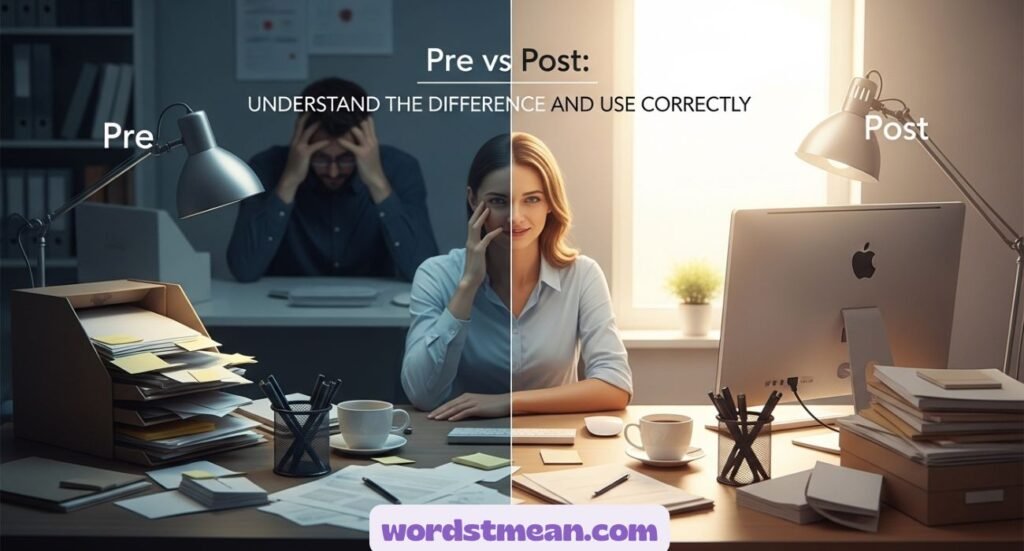
Visual learning makes pre vs post meaning easier to remember. A timeline with a clear marker helps learners instantly see what comes before and after. Teachers and trainers often use visuals to reduce mistakes and improve memory.
Below is a simple table that shows how visualization supports understanding.
| Timeline Point | Prefix Used | Meaning |
| Before the event | Pre | Preparation and planning |
| After the event | Post | Results and reflection |
This method works especially well in presentations, training sessions, and planning documents.
Tips to Master Pre and Post Usage
Mastery begins by always asking one question: does this happen before or after? This habit strengthens grammar tips for writing and reduces errors over time. Reading professional documents and noticing how experts use pre and post also builds confidence.
In pre and post in business writing, clarity protects productivity. In pre and post in reports, accuracy protects credibility. Writers who consistently apply this thinking create clearer, more professional communication.
Quick Tricks to Remember Pre vs Post
Memory tricks make learning easier. Think of pre as prepare and post as process. Preparation happens first, processing happens later. This simple mental link helps recall even under pressure.
Another helpful trick is to imagine a finish line. Everything before the line is pre. Everything after the line is post. These techniques support English grammar basics without overthinking.
Pre vs Post in Everyday Communication
In daily life, pre and post in English appear constantly. From pre-dinner plans to post-dinner cleanup, these prefixes organize routines and expectations. Clear usage avoids scheduling mistakes and misunderstandings.
In emails, accurate pre and post in business writing shows professionalism. In school, correct pre and post in academic writing improves clarity. In manuals, correct pre and post in instructions ensures safety. This shows why mastering pre vs post grammar improves communication at every level.
Understanding the Core Meaning of Pre vs Post
The topic of pre vs post begins with understanding timing. The prefix pre always points to something that happens before an event, action, or process. On the other hand, post refers to what happens after. This simple distinction forms the foundation of clear communication in English writing and speaking.
When you understand the difference between pre and post, you can avoid confusion in both professional and casual contexts. Whether you are writing emails, reports, or academic content, knowing how these prefixes work helps you express ideas in the correct order and keeps your message easy to follow.
Read Also : 45 Other Ways to Say “Nice to See You Again”
Why Pre vs Post Matters in Clear Communication
Using pre and post usage correctly ensures your reader understands the timeline of events. A small mistake, such as using post instead of pre, can completely change meaning. For example, preparation must always come before an event, not after it, which shows why accuracy matters.
Clear timing is especially important in instructions, schedules, and explanations. Mastering pre vs post meaning helps you sound more professional and confident. It also reduces misunderstandings, saving time and effort for both the writer and the reader.
Pre vs Post in Everyday Writing
You see pre and post in sentences every day, often without noticing. Phrases like pre-meeting notes or post-meeting feedback are common in emails and workplace communication. These prefixes help readers instantly understand when an action should take place.
In everyday writing, correct usage keeps communication smooth. When writers follow proper pre vs post grammar, messages become shorter and clearer. This is why these prefixes are essential in daily conversations, reminders, and planning messages.
How Students Can Learn Pre vs Post Easily
For learners, especially beginners, pre vs post for students is a key grammar concept. Teachers often introduce these prefixes early because they appear across many subjects, including science, history, and language arts.
By practicing simple examples like pre-exam study and post-exam review, students quickly build confidence. Learning how these prefixes work improves reading comprehension and helps students structure their writing more clearly and logically.
Pre vs Post in Academic and Professional Writing

In formal settings, accuracy is critical. Pre and post in academic writing help structure research, experiments, and analysis. For instance, pre-test data shows expectations, while post-test data shows results. Mixing these terms can weaken arguments or confuse readers.
The same applies to pre and post in business writing. Reports, proposals, and presentations rely on correct timing language. Using these prefixes properly shows attention to detail and strengthens professional credibility.
Common Confusion Around Pre vs Post
Many writers struggle with common English confusion involving prefixes. The mistake usually happens when people write quickly without thinking about timing. This leads to phrases that sound correct but logically make no sense.
Recognizing common prefix mistakes helps writers self-correct. A good habit is to pause and ask whether the action happens before or after the main event. This simple check can eliminate most errors instantly.
Read Also : 45 Alternative Ways to Say “You Got This”
Pre vs Post in Technology and Instructions
In technical fields, pre and post in technical documents guide users through processes safely. Instructions often include pre-installation checks and post-installation steps, each serving a different purpose in the workflow.
Correct pre and post in instructions prevents errors and improves user experience. When technical writers use these prefixes accurately, users can follow steps confidently without confusion or unnecessary troubleshooting.
Building Confidence With Pre vs Post Usage
Confidence comes from practice and awareness. By reading real-world examples and applying grammar tips for writing, users naturally improve their understanding of prefixes. Over time, choosing between pre and post becomes automatic.
Mastering pre vs post explained not only improves grammar but also sharpens thinking. It trains you to organize ideas logically, communicate clearly, and express timelines accurately across all types of writing.
FAQs
What is the difference between pre and post?
Pre means before an event happens, while post means after it happens. The difference between pre and post is based on timing.
What is the difference between pre and ante?
Pre means before in general English usage, while ante is mainly used in formal terms or games to mean before a specific action.
Is post before or after?
Post always means after. It refers to something that happens following an event or situation.
What are pre and post?
Pre and post are English prefixes that show time. Pre means before, and post means after.
Conclusion: Why Pre vs Post Matters
Understanding Pre vs Post helps you write and speak with clear meaning. Pre means before, and post means after. This simple rule makes your sentences correct and easy to understand. When you use the right prefix, your ideas stay organized. Teachers, classmates, and readers understand your message without confusion. Clear timing makes your writing stronger and more professional.
Learning Pre vs Post builds confidence in school and daily life. You can use these prefixes in essays, emails, and conversations. Good writers always check the timing of events. Strong grammar shows discipline and careful thinking. With practice, you will choose the correct word quickly. Small improvements like this create big success in communication.
Read More….
45 Funny Ways to Say “It’s Hot” 2026 – Creative