

Curious About Trading? What to Learn Before You Put Real Money on the Line
Trading can look surprisingly simple from the outside. You open an account, choose something that appears likely to move, buy or sell, and wait to see what happens.
The difficult part is everything hidden behind those few clicks.
Price movement, risk, position size, market conditions, emotions, and the strategy itself all influence the result. That is why learning how trading works before committing meaningful money can be far more valuable than trying to learn every lesson through losses.
You do not need to know everything before starting. You do need enough of a foundation to understand what you are doing, why you are doing it, and what could happen if the trade moves against you.
Learn How the Strategy Actually Makes and Loses Money
Before choosing a strategy, make sure you can explain how it works in ordinary language.
That includes understanding where the potential profit comes from, what has to happen for the trade to succeed, and what creates a loss. This becomes especially important when moving beyond simply buying shares into areas such as options, where pricing and risk can be less intuitive.
Someone exploring that side of trading might use https://www.vectorvest.com/ while learning how options strategies work and what traders consider when looking for potential opportunities.
Do not stop once you understand the best-case scenario. Ask what happens if the market moves the wrong way, stays flat, or behaves differently from what you expected.
If you cannot clearly describe the downside, you probably do not understand the trade well enough yet.
Get Comfortable With the Idea of Being Wrong
Every trader is wrong sometimes.
That sounds obvious, but it becomes much harder to accept once real money is involved. A trade can look excellent, match your strategy, and still fail.
The goal is not to eliminate losing trades. It is to make sure one bad decision does not damage the account badly enough to prevent you from continuing.
This is why experienced traders think about risk before potential profit. Decide how much you are willing to lose before entering rather than figuring it out while watching the price fall.
It also helps to separate being wrong from being careless. A properly planned trade that loses is not necessarily a mistake. Ignoring your own rules because you hope the market will reverse is a different problem.
Learning to accept small losses can be one of the most important parts of trading responsibly.
Understand Position Size Before Chasing Bigger Returns
A good idea can still become a bad trade if the position is too large.
Beginners often focus on finding the right stock, option, or entry price but pay much less attention to how much money should actually be committed.
Position size controls how strongly one trade affects the overall account.
If a modest price movement can create a loss that feels emotionally or financially overwhelming, the position may simply be too large. Smaller positions give you room to make mistakes, learn, and stay disciplined when the market becomes volatile.
This also makes it easier to follow the original plan. When too much money is involved, ordinary market movement can suddenly feel like an emergency.
You should know approximately how much of your capital is at risk before pressing the button, not discover it afterward.
Learn What Moves Prices
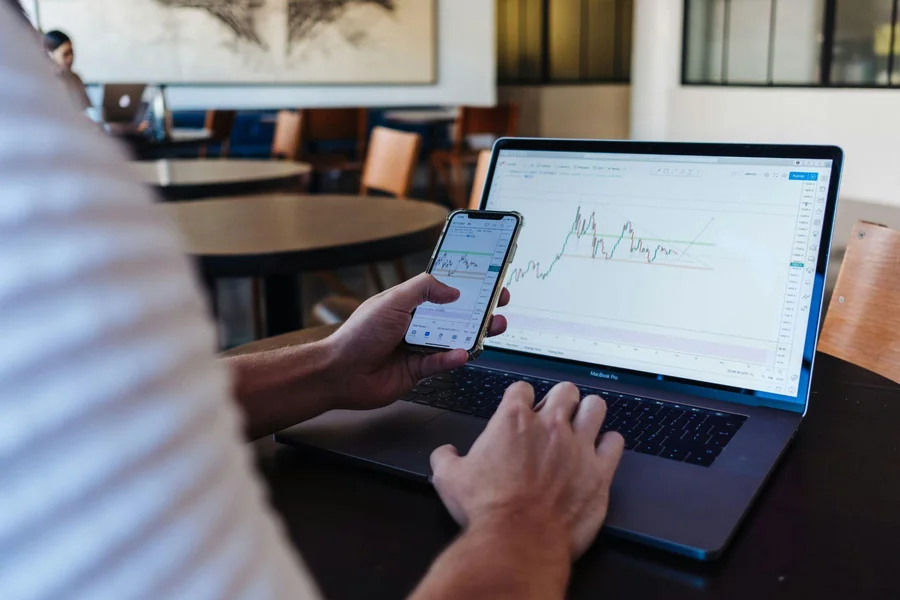
You do not need to predict every market movement, but you should understand why prices can change quickly.
Company earnings, economic data, interest-rate expectations, industry news, geopolitical events, and broader market sentiment can all affect prices. Sometimes a stock moves because something changed specifically at the company. Other times it simply follows the wider market.
Knowing the difference matters.
It is also useful to understand scheduled events. Earnings announcements, inflation reports, employment data, and central bank decisions can create more volatility than an ordinary trading session.
If one of those events is approaching, decide whether you actually want to hold a position through it.
Trading becomes much easier to understand when price movement is seen as a reaction to changing information rather than as random numbers on a chart.
Practice Making a Plan Before You Enter
One of the simplest trading habits is also one of the easiest to ignore: know what you are going to do before the trade begins.
Write down why you are entering, what would confirm that the idea is working, what would prove it wrong, and where you might take a profit or reduce the position.
This prevents the reasoning from changing every time the price changes.
Without a plan, a short-term trade can suddenly become a “long-term investment” because you do not want to sell at a loss. A profitable position can also be held indefinitely because you become convinced it must keep rising.
A basic plan gives you something to compare the real outcome against.
It does not need to predict every possibility. It simply needs to prevent every decision from being improvised while emotions are running higher.
Use Practice to Test Yourself, Not Just the Strategy
Paper trading or using very small positions can be useful before committing larger amounts of money.
But do not use practice only to see whether you can pick winners.
Pay attention to your behavior. Do you abandon the plan when a trade moves against you? Do you chase a stock after it has already risen sharply? Do you trade more often because you are bored? Do you become overconfident after several wins?
Those habits matter because trading decisions are not made by a strategy alone. They are made by a person reacting to uncertainty.
Real money can intensify those reactions, so learning your own tendencies early can be valuable.
Keep a simple record of trades and the reasoning behind them. After several weeks, patterns may become obvious that would be difficult to notice from memory alone.
Know When Not Trading Is the Better Decision
Trading does not require you to have a position all the time.
There will be days when nothing matches your strategy, the market is unusually unpredictable, or you simply do not understand what is happening well enough to make a confident decision.
Doing nothing is an option.
This can be difficult when markets are moving quickly and other people seem to be making money. The temptation to participate can make almost any setup look attractive.
Waiting for an opportunity you actually understand is usually better than inventing a reason to trade because you feel you should be doing something.
That mindset becomes easier once you stop measuring progress by the number of trades you make.
Learning comes first. Understand the strategy, know the downside, control position size, create a plan, and pay attention to your own behavior.
When you eventually put real money on the line, you will still face uncertainty. The difference is that you will be taking risks you understand rather than discovering what they were after the trade is already open.