Simple Ways to Improve Digestive Health
Nobody thinks about digestion until it stops behaving. Then it’s bloating after lunch, that heavy feeling by 3pm, or bathroom trips that just… aren’t regular. Turns out your gut has a hand in almost everything — energy, mood, even how well your immune system holds up. But fixing it isn’t complicated. No cleanse, no $80 supplement stack. Just a handful of habits, done consistently. Here’s what actually works, starting with the basics.
What Is Digestive Health?
Digestive health comes down to one thing: how well your body breaks down food, absorbs what it needs, and clears out the rest. When it’s working, meals don’t leave you bloated or sluggish. About 70% of your immune system sits in your gut, so this isn’t just a stomach issue — it ripples outward. Diet, hydration, movement, sleep, stress. All of it feeds into the same system. Get the basics right, and digestion mostly runs itself.
Add Fiber — But Don’t Rush It
Fiber’s the easy win here. It bulks up stool, feeds the bacteria you want more of, and keeps things moving instead of stalling. Most people eat less than they realize, and it shows up quietly — constipation, irregularity, that “off” feeling after meals.
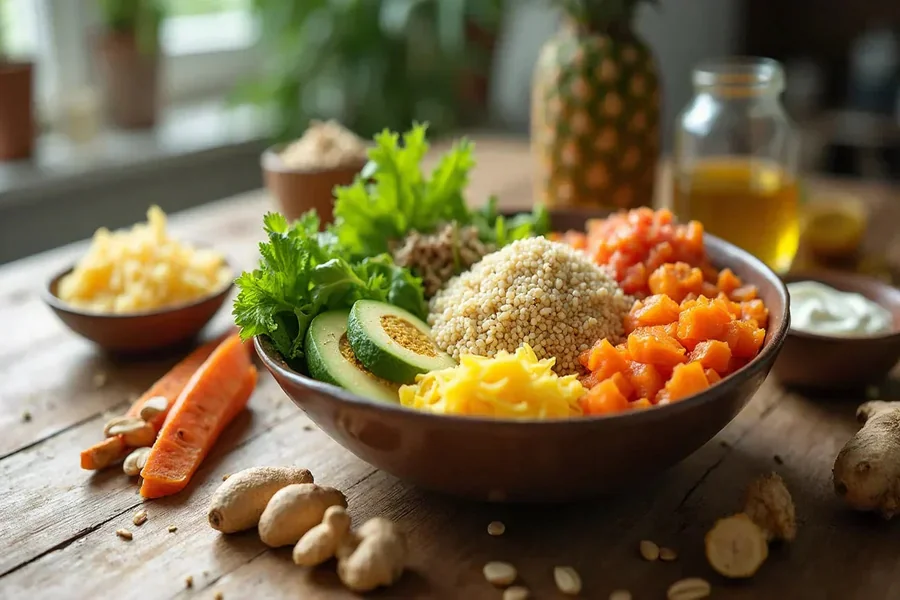
Good sources to lean on:
- Oats and whole grains
- Beans and lentils
- Apples, pears, berries
- Broccoli, carrots, leafy greens
- Nuts and seeds
One catch: don’t triple your intake overnight. Ramp up slowly. Otherwise you’ll swap constipation for bloating, which isn’t really a win.
Water Matters More Than You’d Think
Fiber needs water to do its job. Skip the water, and fiber can backfire — making things worse instead of better.
Eight glasses a day is the rough target, though it shifts depending on activity, climate, body size. Cucumber, watermelon, herbal tea — all count toward the total. Quick gut check: if your urine’s consistently dark, that’s your answer.
Eat on a Rhythm, Slow Down While You’re At It
Digestion likes routine. Eating around the same times each day helps your body anticipate meals and release the right hormones at the right moment. Random timing — or skipping meals entirely — throws that rhythm off more than people expect.
Speed matters too. Eat fast, and you swallow air, chew less, digest worse. Try putting the phone down at meals. Chew a little longer than feels natural. Small shift, noticeable difference.
Move — Doesn’t Have to Be Much
Movement gets things physically moving through your digestive tract. Even a short walk after dinner helps. Sitting all day does the opposite — it’s one of the quieter causes of sluggish digestion nobody talks about.
No gym required:
- 15–20 minute walk after meals
- Light stretching or yoga
- Cycling or swimming a couple times a week
- Stairs instead of the elevator
Consistency wins over intensity. Five short walks a week beats one brutal gym session, at least for your gut.
Stress Is Doing More Damage Than You Think
Gut and brain are wired together — the gut-brain axis, if you want the technical term. Stress pulls resources away from digestion, and that shows up as cramps, bloating, irregular bathroom habits. Keep it up long enough, and it can shift your gut bacteria balance too.
What actually helps:
- A few minutes of deep breathing daily
- Real breaks during the workday
- Sleep that’s actually consistent
- Time outside, or with people who don’t drain you
Won’t erase stress completely. But for most people, it takes the edge off stress-related stomach issues, and that’s usually enough. Lots of people also rely on medical marijuana for managing stress, but you’ll need a medical marijuanas card in MS for that.
Feed the Bacteria You Already Have
Trillions of bacteria live in your gut, quietly doing the work — digesting food, making certain vitamins, keeping harmful microbes in line. Balance matters more here than most people assume.
Probiotic foods add bacteria directly: yogurt with live cultures, kefir, sauerkraut, kimchi, miso. Prebiotics work differently — they feed bacteria already there. Garlic, onions, bananas, asparagus. Mix both in regularly, and it’s one of the more underrated moves for long-term gut health.
Final Thought
This isn’t a lifestyle overhaul. More fiber, enough water, daily movement, stress kept in check — that’s most of it. Pick one or two habits, give them two weeks, see what shifts. Small changes, repeated often, tend to beat big ones that fizzle out by week two.