Since vs Sense – Difference, Meaning & Usage Guide (2026)
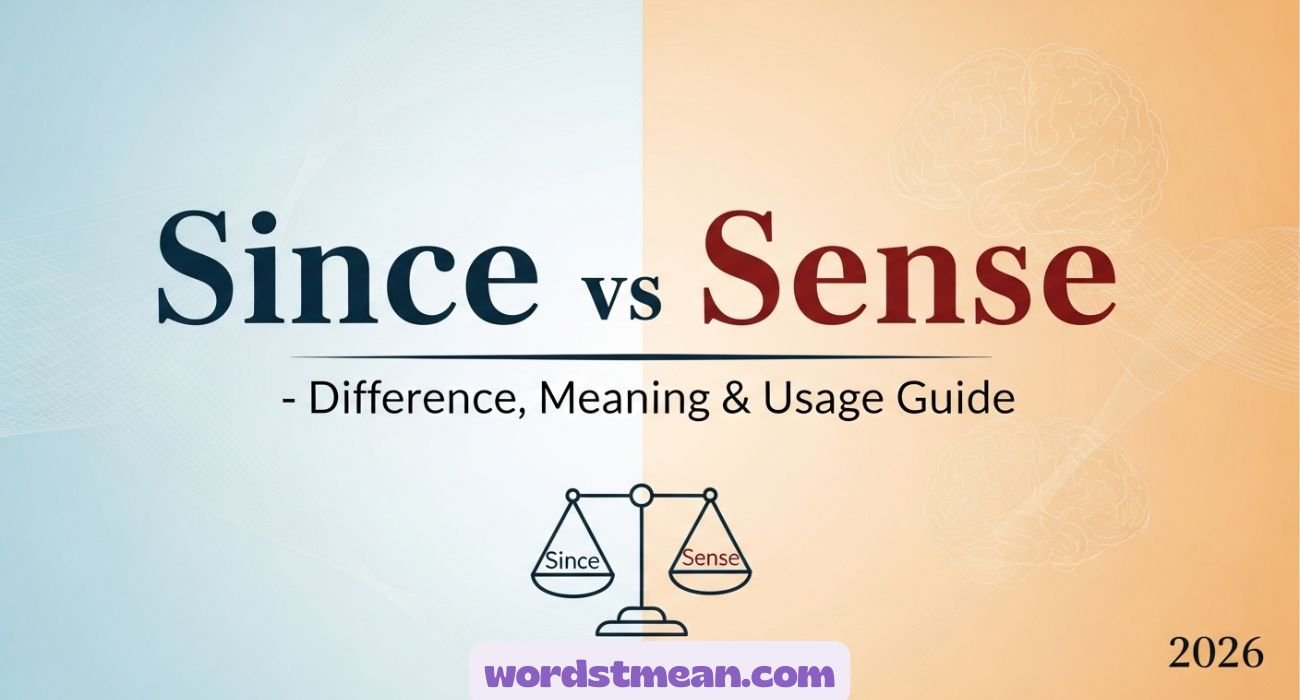
Since vs Sense are two words that sound alike but have different meanings. Since shows time or reason, like “I have lived here since 2015.” Sense shows understanding, feeling, or perception, like “She has a good sense of smell.” It is important to know the difference to use them correctly.
Many people mix up since vs sense when speaking or writing. This can make sentences confusing. Learning the difference makes your English better and easier to understand.
Since vs Sense appears in daily English. Since is used for time or cause. Sense is used for feelings, understanding, or awareness. Using them right helps you speak and write clearly.
Why People Commonly Confuse “Since” and “Sense”
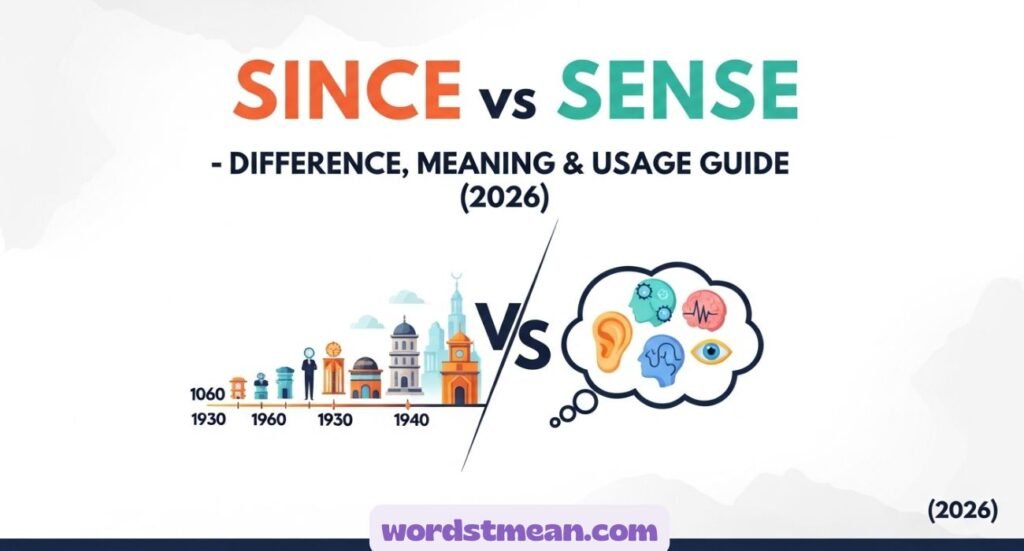
Many people mix up since vs sense because they are confused homophones in English. This means that they sound very similar, but their meanings and roles in a sentence are completely different. Since meaning in English is usually connected to time or reason. For example, when you say, “I have lived here since 2015,” the word since acts as a preposition or conjunction, showing when something started. On the other hand, sense meaning in English refers to understanding, feeling, or perception, as in “She has a strong sense of humor” or “I lost my sense of direction.”
The confusion often happens because people hear the word and try to guess its meaning without looking at the sentence context. ESL learners frequently write sentences like “I have no since of what happened,” which is incorrect. The correct form is “I have no sense of what happened.” Understanding the difference between since as preposition, since as conjunction, and sense as noun helps prevent these errors. The key is to focus on whether the sentence is about time or cause (use since) or about feeling, meaning, or perception (use sense).
Pronunciation Pitfalls: Hearing vs Understanding
The pronunciation of since and sense is almost identical, especially when spoken quickly, which leads to frequent mistakes. This makes since vs sense confusion common in both casual conversation and formal writing. When listening, the brain must rely on context to determine which word is correct. For instance, “I have known her since childhood” refers to time, whereas “She has a good sense of smell” refers to perception.
Pronunciation challenges can be addressed by practicing listening and speaking. Pay attention to the context in the sentence. In English, words like since vs sense, or other English homophones, need careful attention to sentence meaning. A helpful tip is to remember that since meaning in English is linked to time or reason, so if the sentence is about when something happened, it is likely since. If it is about understanding, feeling, or perception, then it is sense as a noun.
The Role of Context in Choosing Between Since and Sense
Understanding context is essential to choosing the correct word. A sentence like “She feels lost since the move” could confuse readers. Here, the surrounding words show whether we are talking about time or perception. If it means because of the move, since is correct. If it refers to her awareness or feelings, sense is correct. Context is the guide that helps avoid common mistakes with since and sense.
Since usage examples include sentences like “I haven’t seen him since last week” or “Since it’s raining, we’ll stay inside.” Sense usage examples include “He has a good sense of humor” or “It doesn’t make sense to go now.” By paying attention to these cues, learners can easily distinguish between the two and improve their English.
Quick Grammar Tips to Avoid “Since” and “Sense” Errors

A few simple grammar rules can help learners avoid avoiding since vs sense errors. Since functions as a preposition or conjunction, connecting clauses or showing time. Sense, on the other hand, is a noun, representing perception, understanding, or awareness. A clear table illustrates the difference:
| Word | Part of Speech | Example Sentence |
| Since | Preposition/Conjunction | “Since you are here, let’s start the meeting.” |
| Sense | Noun | “She has a strong sense of taste.” |
If you are unsure, ask yourself: Is the sentence about time or cause, or is it about feeling, meaning, or perception? This simple check will ensure the correct usage of since and sense.
Common Mistakes Learners Make with Since and Sense
Common mistakes with since and sense often involve substituting one for the other in writing or speaking. ESL learners sometimes write “I don’t have any since of humor” instead of the correct “I don’t have any sense of humor.” Another frequent mistake is using since when talking about feelings or understanding, such as “Sense you arrived late, we started without you,” which should be “Since you arrived late, we started without you.”
Being aware of these errors and practicing since vs sense examples in context helps learners strengthen their writing and speaking. Over time, this improves accuracy and confidence in English.
How “Sense” Connects to Our Five Senses and Intuition
The word sense is closely linked to our five senses: sight, hearing, taste, touch, and smell, as well as to intuition and perception. For example, you can say, “She has a good sense of smell,” “He lost his sense of balance,” or “I had a sense something was wrong.” These examples show how sense as a noun can describe both physical perception and abstract awareness.
Understanding time vs perception in English clarifies that since is about time, while sense reflects awareness or feeling. Sense usage examples like “He has a strong sense of responsibility” or “It makes sense to study before exams” highlight the versatility of the word.
Read Also : Cancelation or Cancellation – What’s the Difference?
Historical Origins: Where Did “Since” and “Sense” Come From?
The origins of since and sense explain why they sound alike but have different meanings. Since comes from Old English “siththan,” meaning “after that time,” making it naturally tied to time and cause. Sense comes from Latin “sensus,” meaning “perception or feeling,” emphasizing understanding and awareness. These historical roots show why since meaning in English is different from sense meaning in English, even though they sound similar.
For example, “We have been friends since childhood” illustrates time, while “She has a strong sense of justice” illustrates perception. Knowing these origins strengthens understanding and helps prevent since or sense confusion.
The Importance of Correct Usage in Formal Writing
Using since vs sense correctly in formal writing is crucial. Misusing these words can make your writing appear careless. For example, writing “I have no since of direction” in a professional email or essay looks unprofessional, while “I have no sense of direction” is correct and clear. In formal writing, since should be used to explain time or cause, whereas sense refers to understanding or perception.
Correct usage signals attention to detail and grammar awareness. This is especially important in reports, academic essays, and business communication. Following these rules improves both clarity and credibility.
Fun Memory Tricks to Remember Since vs Sense
Remembering the difference between since vs sense can be made simple with memory tricks for since and sense. One method is to link since to time, imagining a clock. For sense, connect it to your five senses or brain, indicating perception or awareness. A quick test: if the sentence talks about when or why, use since; if it talks about understanding or feeling, use sense as a noun.
This strategy makes correct usage automatic and adds a playful way to strengthen English skills.
How to Proofread Your Writing for Since/Sense Confusion
Proofreading is an effective way to catch since vs sense errors. Reading your text aloud allows you to hear if the word fits the context. Ask yourself: “Is this sentence about time or cause, or about perception or understanding?” Highlight any confusing words and check the context.
For example, “She had no since of what was happening” should be corrected to “She had no sense of what was happening.” Making this a habit ensures professional and clear writing.
Read Also : 45 Other Ways to Say “Thank You for Your Insight”
Exploring Idioms and Phrases with “Sense”
Many English idioms use sense, and confusing them with since can be problematic. Phrases like “That makes sense,” “She has common sense,” or “He doesn’t have the sense to come in out of the rain” all rely on sense meaning in English.
Using since in these idioms is incorrect, such as saying “That makes since,” which is grammatically wrong. Learning these sense in idioms and expressions strengthens both writing and speaking skills and helps learners sound natural in everyday English.
Understanding the Basics of Since vs Sense
The words since vs sense are often confused because they sound almost identical, but their meanings are completely different. Since meaning in English usually refers to time or cause, while sense meaning in English relates to perception, awareness, or understanding. Recognizing these fundamental differences is the first step to writing and speaking clearly.
Using examples helps solidify understanding. For instance, “I have known her since childhood” talks about time, whereas “She has a good sense of humor” describes perception. By learning these basic rules, students and native speakers alike can avoid common errors and confidently choose the correct word in any context.
How Pronunciation Affects Since vs Sense
The pronunciation of since and sense can be tricky, especially when spoken quickly. Both words have an “s” sound and end in “-nce,” making them easy to confuse. Listening carefully and paying attention to context is essential for avoiding mistakes in both casual conversation and formal writing.
Practicing pronunciation can help. Reading aloud, repeating sentences, and noticing whether the sentence refers to time or perception allows learners to distinguish the two words. Understanding how since vs sense examples sound in context strengthens English listening and speaking skills, making communication more precise and confident.
Using Context to Choose Between Since and Sense
Context is the key to deciding whether to use since or sense. If the sentence describes a time frame or reason, since as preposition or since as conjunction is correct. If it involves understanding, feeling, or perception, then sense as a noun is needed.
For example, “We have lived here since 2010″ clearly refers to time, while “He has a strong sense of responsibility” focuses on perception. Paying attention to surrounding words ensures correct usage of since and sense, helping learners avoid awkward mistakes in writing and speech.
Read Also : 45 Other Ways to Say “Handsome” (Best Synonym)
Common Mistakes with Since and Sense
Many English learners make errors with since vs sense because they sound alike. Writing sentences like “I have no since of direction” is incorrect. The correct form is “I have no sense of direction.” Awareness of these mistakes improves both spoken and written English.
Another common error occurs when learners use since for feelings or understanding. For instance, “Sense you are late, we started the meeting” should be “Since you are late, we started the meeting.” Identifying these patterns and practicing since vs sense examples helps learners develop confidence in grammar and usage.
How Sense Relates to Our Five Senses
The word sense connects directly to our five physical senses: sight, hearing, taste, touch, and smell. Saying “She has a good sense of smell” illustrates how sense as a noun can describe physical perception in everyday life.
Sense meaning in English also extends to intuition and abstract awareness. Phrases like “I had a sense something was wrong” demonstrate how sense usage examples can describe feelings or understanding. This dual meaning makes sense a versatile and important word in English vocabulary.
Since: Time and Cause in English
Since meaning in English is mostly about time or cause, making it an important tool for connecting ideas. For example, “We haven’t met since last week” shows when something started, while “Since it’s raining, we’ll stay inside” explains a reason.
Using since as preposition and since as conjunction correctly improves clarity. Confusing since with sense in these situations can change meaning entirely. Practicing sentences and identifying context ensures learners understand how to use since and sense properly.
Idioms and Expressions Using Sense
English has many idioms that include sense. Phrases like “That makes sense,” “She has common sense,” and “He doesn’t have the sense to come in out of the rain” all rely on sense meaning in English.
Trying to replace sense with since in idioms is incorrect and sounds unnatural. Learning common idioms and practicing sense usage examples improves fluency and helps avoid since vs sense confusion, making communication more accurate and engaging in both formal and informal situations.
Tips and Tricks to Remember Since vs Sense
Memory tricks help learners distinguish since vs sense. A simple technique is linking since to time, imagining a clock, and sense to perception or awareness, imagining your brain or five senses. This visual association reinforces correct usage.
Another strategy is asking yourself whether the sentence talks about time or cause, or about understanding and feeling. Using these memory tricks for since and sense makes it easier to avoid mistakes, improve English grammar, and confidently write or speak without confusing these commonly misused words.
FAQs
How do you use sense?
Use sense as a noun to describe understanding, perception, or awareness, for example, “She has a good sense of smell.”
Where do we use since?
Use since as a preposition or conjunction to indicate time or cause, for example, “I’ve lived here since 2015” or “Since it’s raining, stay inside.”
What is the difference between so and since?
So shows result or consequence, while since shows time or reason in a sentence.
What is the difference between far and since?
Far indicates distance, while since indicates time or cause in context.
Conclusion
Understanding Since vs Sense helps you write and speak clearly. Since talks about time or reason, like “I have lived here since 2015.” Sense talks about understanding, feeling, or awareness, like “She has a good sense of smell.” Knowing the difference avoids mistakes in school work, emails, and daily conversation. Using the right word shows that you understand English and can communicate well.
Practicing Since vs Sense makes it easier to remember. Look at the sentence carefully and think about whether it is about time or feeling. Read aloud and use memory tricks to help you. Over time, using since and sense correctly will become natural and easy for writing and speaking.
Read More